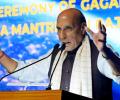
Defence Minister Rajnath Singh has emphasised the need for India to develop a robust drone manufacturing ecosystem to enhance its defence capabilities, drawing lessons from recent global conflicts.
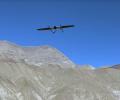
The 515 Army Base Workshop in Bengaluru has signed multiple strategic MoUs to bolster indigenous drone manufacturing and ecosystem resilience, marking a significant step towards modernisation and self-reliance in unmanned systems.
Defence Minister Rajnath Singh has emphasised the need for India to develop a robust drone manufacturing ecosystem, drawing lessons from recent global conflicts and highlighting the importance of self-reliance in drone technology.
The 515 Army Base Workshop (ABW) in Bengaluru has signed multiple MoUs to strengthen indigenous drone manufacturing and ecosystem resilience, marking a significant step towards modernisation and self-reliance in unmanned systems.

Dreamfly Innovations is setting up a 40,000-sq ft aviation battery manufacturing facility in North Bengaluru with an investment of Rs 40 crore. This plant will produce advanced batteries for various drone applications, supporting India's growing drone economy and domestic drone makers.
China has cancelled drone shows and suspended drone flights across several provinces following a small plane crash in Beijing that raised significant security concerns, especially near top leadership compounds. This move signals a tightening of low-altitude aviation regulations, impacting the burgeoning "low-altitude economy" and civilian drone use, with new laws classifying illegal drone use as a public security threat.

A new study predicts a 55 per cent surge in drone deployment across India's logistics and clean tech sectors over the next three years, driven by rapid digitalisation and the need for faster, more sustainable solutions. The Indian logistics market is projected to nearly double to USD 428.7 billion by 2033, highlighting a significant transformation in these key industries.

Indian drone startup Garuda Aerospace has partnered with Extensee SAS to deploy Airbus' Flexrotor unmanned aerial vehicles internationally. This collaboration aims to leverage Extensee's operational expertise for various long-range autonomous missions, expanding Garuda Aerospace's Drone-as-a-Service offerings globally.

A tech firm has delivered to the Army 106 turbojet-powered kamikaze drones designed to engage high-value targets deep inside enemy territory and operate in contested electromagnetic environments, according to a statement.

Odisha-based BonV Aero has partnered with ParaZero Technologies to introduce advanced counter-drone systems to India's defence and security agencies, offering a kinetic solution to neutralise hostile drones.

Air Chief Marshal A P Singh, the IAF chief, has strongly advocated for India to achieve greater self-reliance in unmanned aerial systems and other critical defence technologies, stating, "Technology delayed is technology denied." He stressed the importance of indigenous development to avoid dependency on other countries for components.

IdeaForge Technology Ltd has announced a partnership with Digital Media Professionals Inc. (DMP) to develop next-generation AI drones, aiming to enhance autonomous capabilities and expand into the Japanese market.
A drone designed to tranquilise violent elephants without close human contact has been unveiled, marking a significant advancement in using indigenous UAV technology for mitigating human-wildlife conflict.

In the race for 87 Medium-Altitude Long-Range, Endurance unmanned aerial vehicles deal, around 10 bids have been received from Indian private and public sector firms.
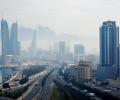
The modern war is about quality over quantity, points out Mihir S Sharma.
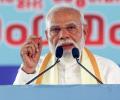
Prime Minister Narendra Modi criticised the Congress party and Rahul Gandhi during a rally in Kochi, Kerala, accusing them of being unaware of India's development and playing politics over the West Asia crisis. He urged voters to end the alternating rule of LDF and UDF governments and give the BJP-led NDA a chance to govern the state.

History may remember Takaichi Sanae not as the leader who simply accelerated Japanese rearmament, but as one who governed during Japan's transition from an industrial-age security model to a post-industrial strategic member of the global order, points out Varun Arya.

The harsh truth is that the US is no longer a reliable partner, cautions Ramesh Menon.

Loitering munitions, often described as 'suicide drones' or 'kamikaze drones', are becoming central to modern warfare because of their ability to hover over target areas, identify threats and strike with high precision.

A lesson for India is to clearly define objectives beforehand, so that the adversary or other parties do not attempt to mitigate them midway.
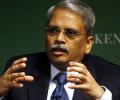
Infosys co-founder Kris Gopalakrishnan urges Indian startups to focus on deep technology and advanced manufacturing to ensure strategic autonomy.

Punjab Police have arrested a suspect linked to an alleged firearms and narcotics trafficking module, recovering seven sophisticated pistols and 2.1 kg of heroin.
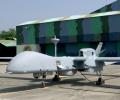
The Indian government is planning to develop an unmanned combat search and rescue aircraft for the Indian Air Force, designed to operate autonomously and in challenging terrains.
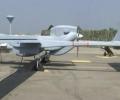
The sources declined to specify the number of drones the Navy plans to acquire but said the focus is now on manufacturing the MK-II in India through partnerships with Hindustan Aeronautics Limited (HAL) and Elcom.

A 44-year-old Iranian woman with a US Green Card was arrested at Los Angeles International Airport on suspicion of trafficking weapons on behalf of the Iranian government and is expected to appear in court on Monday.
The Enforcement Directorate conducted raids across Maharashtra and Gujarat as part of a money laundering investigation against Mohammad Salim Dola, an alleged drug trafficker associated with the Dawood Ibrahim gang.

The National Investigation Agency (NIA) has filed a chargesheet against 10 accused in connection with the Red Fort area car bomb explosion case, which resulted in 11 fatalities and extensive property damage.

The National Investigation Agency (NIA) has filed a chargesheet against 10 accused in connection with the Red Fort blast, revealing a jihadi conspiracy by Ansar Ghazwat-ul-Hind to overthrow the Indian government and impose Sharia law.

The Bhairav Battalion is positioned between the Para Special Forces and regular infantry units to meet modern warfare requirements, especially in view of drone-intensive warfare.

'India's ties with Israel have to do with defence and general technology.' 'The war changes nothing in what India and Israel hope to get from the relationship.' 'It's not as though India will get significantly more benefits from Iran if India abandons Israel at this time.'

Hegseth said the military campaign, code-named Operation Epic Fury, against Iran is "laser focused" and "decisive," with objectives set directly by the US administration remaining unchanged since the start of operations.
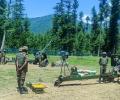
'India's security challenges are no longer confined to the Line of Control or the Line of Actual Control.'
'They also span cyber networks, economic systems, information warfare, technology ecosystems, maritime routes, and internal social cohesion.'

The United States used an array of weapons in the strikes conducted against Iran as part of Operation Epic Fury on Saturday -- which included artificial intelligence services from Anthropic, according to a report by Reuters.

Amidst escalating tensions in West Asia, Iran claims to have inflicted heavy casualties on US forces in Dubai, a claim vehemently denied by the US Central Command, raising concerns about regional stability.

US President Donald Trump has announced plans to clear the Strait of Hormuz to secure the vital oil corridor, citing risks to global energy supplies and criticising other nations' inaction.
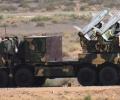
India's defence sector is on the cusp of a 'super cycle' of growth, driven by escalating geopolitical conflicts and a strong policy push towards indigenous manufacturing, with major players like BEL, HAL, and BDL poised for significant order inflows and technological advancements.

Following in Apple's footsteps, Alphabet - Google's parent company - is in advanced talks with Foxconn to manufacture Pixel smartphones in Tamil Nadu, an industrial state which will also double up as drone-manufacturing hub for the US tech giant soon. According to a state government release, officials from Google will soon visit Chennai to meet Tamil Nadu Chief Minister MK Stalin to hold discussion on manufacturing of Google Pixel near Chennai.

'Without ground troops the US will not be able to oust the Iranian Islamic regime. Political change does not happen just by using bombs or planes.'

E-commerce players may soon rent out drones, so you can use them the way you book a cab on an app, and test viable use-cases for last-mile delivery.
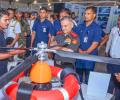
'The defence forces have come up with certain problems they face in the drone space.' 'Recently we had a meeting at which they presented the problems to many of our start-ups and faculty.' 'Some of the start-ups have started working on the problems.'
